18 December 2025
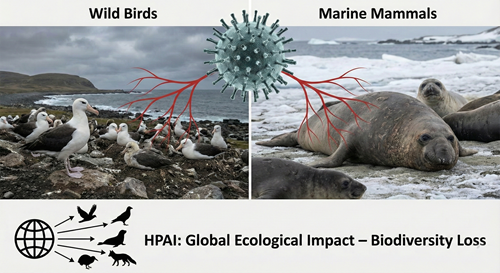
The World Organisation for Animal Health (WOAH) has released a critical statement addressing the catastrophic impact of High Pathogenicity Avian Influenza (HPAI) on wildlife populations worldwide. The organization reports that the current panzootic (a pandemic affecting animals) is causing unprecedented ecological disruption and mortality rates across a rapidly expanding range of species.
According to the statement, the virus has demonstrated a worrying capacity to cross species barriers. While HPAI was historically associated with poultry and wild waterfowl, recent strains are heavily impacting mammals. The report cites devastating statistics, such as the loss of nearly 50% of breeding female southern elephant seals in South Georgia and recurring outbreaks decimating black-browed albatross colonies in the Falkland Islands.
"These mortality events have far-reaching ecological consequences," the WOAH states, warning that population declines and reproductive failures could undermine ecosystem stability for generations.
In response to this crisis, WOAH is urging the international community to adopt a "One Health" approach. Enhanced Surveillance. Explicitly advising against the culling of wild animals, noting that such measures are ineffective and detrimental to biodiversity. Improving rapid genomic characterization of viruses and data sharing between nations.
Not a single word about vaccines.