21 December 2019
Dr. John B. Robbins, a Senior Investigator at the National Institutes of Health (NIH) and a visionary pioneer in the development of the vaccine against Haemophilus influenzae type B (Hib), passed away in late November 2019 at the age of 86.
Born to a Jewish family in Brooklyn on December 1, 1932, John Bennett Robbins was the descendant of a long line of rabbis from Minsk (now the capital of Belarus). His family’s original surname, Rabinowitz, was changed after his great-grandfather immigrated to the United States.
Dr. Robbins earned his Bachelor’s degree in History from New York University in 1956, followed by his Medical Degree from the same institution in 1959. He began his career as a pediatrician at the University of Florida, specializing in immunology and infectious diseases. In the late 1960s, he joined the Albert Einstein College of Medicine in the Bronx, before moving to the NIH in 1970. After a decade-long tenure at the FDA, he returned to the NIH in 1984 to establish the Laboratory of Developmental and Molecular Immunity.
A Breakthrough in Vaccinology
The Hib conjugate vaccine, which received FDA approval in 1987, remains one of the most significant achievements in public health. Prior to its development, Hib-induced meningitis claimed the lives of approximately 400,000 children annually worldwide, according to World Health Organization (WHO) data. Today, the incidence of the disease has plummeted to approximately one case per million children under the age of five in vaccinated populations.
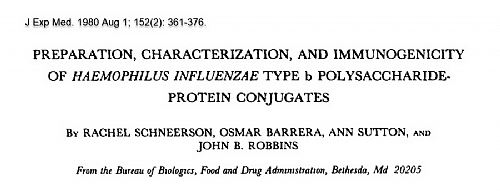
The primary discovery made by Dr. Robbins and his long-time collaborator, Dr. Rachel Schneerson, revolutionized the field of vaccinology. Their development of conjugation technology involves chemically linking the bacterial capsule polysaccharides (antigens) to carrier proteins. This process significantly enhances the immunogenicity of the vaccine, particularly in infants, and offers a superior safety profile compared to earlier methods.
Before the 1980s, most bacterial vaccines were composed of whole-cell inactivated bacteria or toxoids, which occasionally triggered adverse reactions. The next generation of conjugate vaccines, built upon the foundational research of Robbins and Schneerson, proved to be both more effective and exceptionally safe.
Legacy and Recognition
Dr. Robbins’ contributions to medicine were recognized with numerous prestigious awards. In 1996, he received the Albert Lasker Clinical Medical Research Award. In 2001, he was awarded the Sabin Gold Medal specifically for his role in developing the Hib conjugate vaccine.
His global impact was further honored in 2006 with the WHO Pasteur Award, and in 2017, he received the Prince Mahidol Award in the field of Public Health, presented by the Royal Family of Thailand.
Dr. Robbins leaves behind a legacy of scientific excellence that continues to save hundreds of thousands of young lives every year.