09 December 2017
The suspension of Sanofi Pasteur’s dengue vaccine (Dengvaxia) in the Philippines has escalated into a formal investigation characterized by mutual recriminations. The World Health Organization (WHO) representative in the Philippines was quick to claim that the organization had not recommended the vaccine's use.
This, however, is inaccurate.
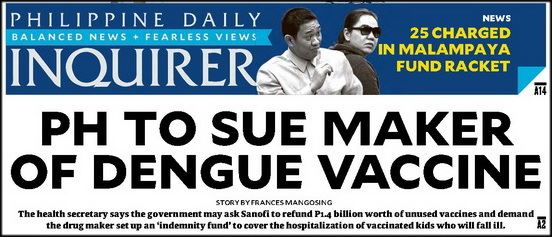
The WHO endorsed the vaccine in April 2016, recommending its implementation in regions with a high disease burden. Consequently, Philippine authorities have approached the manufacturer, Sanofi Pasteur, demanding a refund of the $73 million paid for the vaccine and are currently threatening legal action against the company.
It is important to note that despite explicit warnings issued by one of the field's leading experts, Dr. Scott B. Halstead, which we featured on our website in May of this year, the WHO did not see fit to halt the massive vaccination campaign being conducted in the Philippines.
A scientific article is currently being published in the Journal of Clinical Epidemiology, which re-examines the 2015 safety data that served as the basis for the vaccine's approval and its promotion in developing nations. This new research identifies significant flaws in the data analysis. Following these findings, the Philippine FDA has ordered Sanofi Pasteur to cease all sales and marketing of the vaccine.
Gambling with the health of children, a lack of transparency, and the "priesthood-like" dogmatism exhibited by health officials are precisely the factors that fuel and "refuel" anti-vaccination movements. Ultimately, how does the publication of a study that misrepresents data to support a commercial vaccine differ from Andrew Wakefield’s 1998 study (which was later retracted due to data manipulation) that allegedly found a link between the MMR vaccine and autism?